[00:00:00] Speaker A: Do you think that you can love someone deeply and still recognize that the relationship isn't healthy?
[00:00:05] Speaker B: Yes.
[00:00:06] Speaker C: Yeah.
[00:00:06] Speaker D: I think you should give the person an opportunity to change, I think, because if you love them deeply, have you give. Have you told them first off? Because sometimes it's all in your head, and you think they should get it, and you don't.
You gotta have a blunt, hard conversation, in my opinion. You gotta be like, before you break up, at least do that, because it's gonna end or it's gonna end. So at least give the person opportunity to grow and change and to meet what you need.
This isn't. This isn't what I want or this isn't healthy. And you just. You just got to put it out there, in my opinion. You got to put it out there. Don't ghost them. That's gonna cause more drama.
[00:00:42] Speaker A: Yeah, yeah.
[00:00:42] Speaker D: Let's not even have a hard conversation.
[00:00:44] Speaker A: Let's not even start to talk about ghosting, because I have an issue with ghosting. I think people who ghost are terrorists.
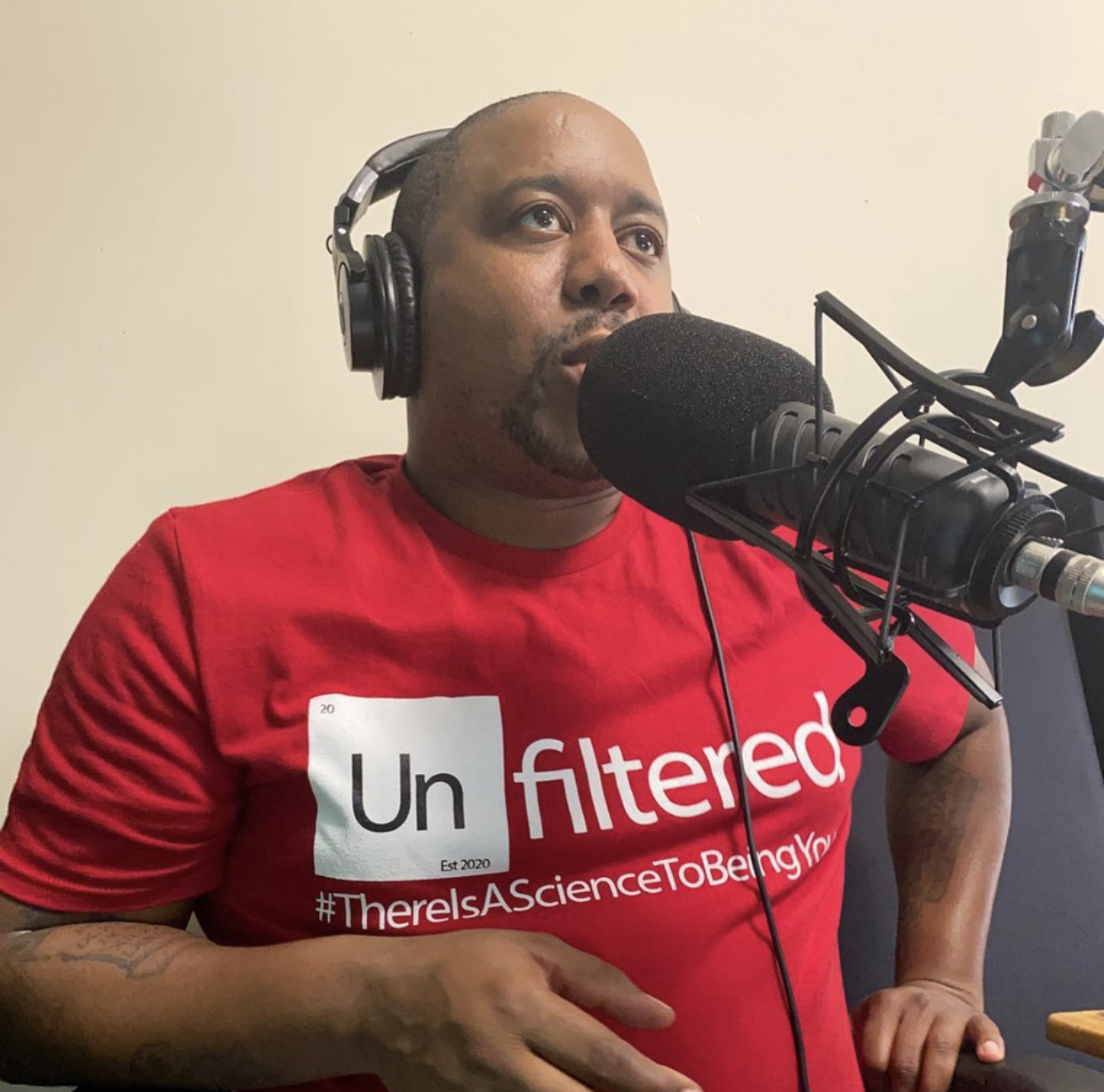
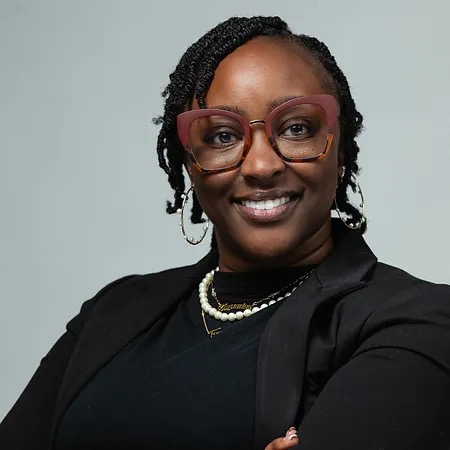
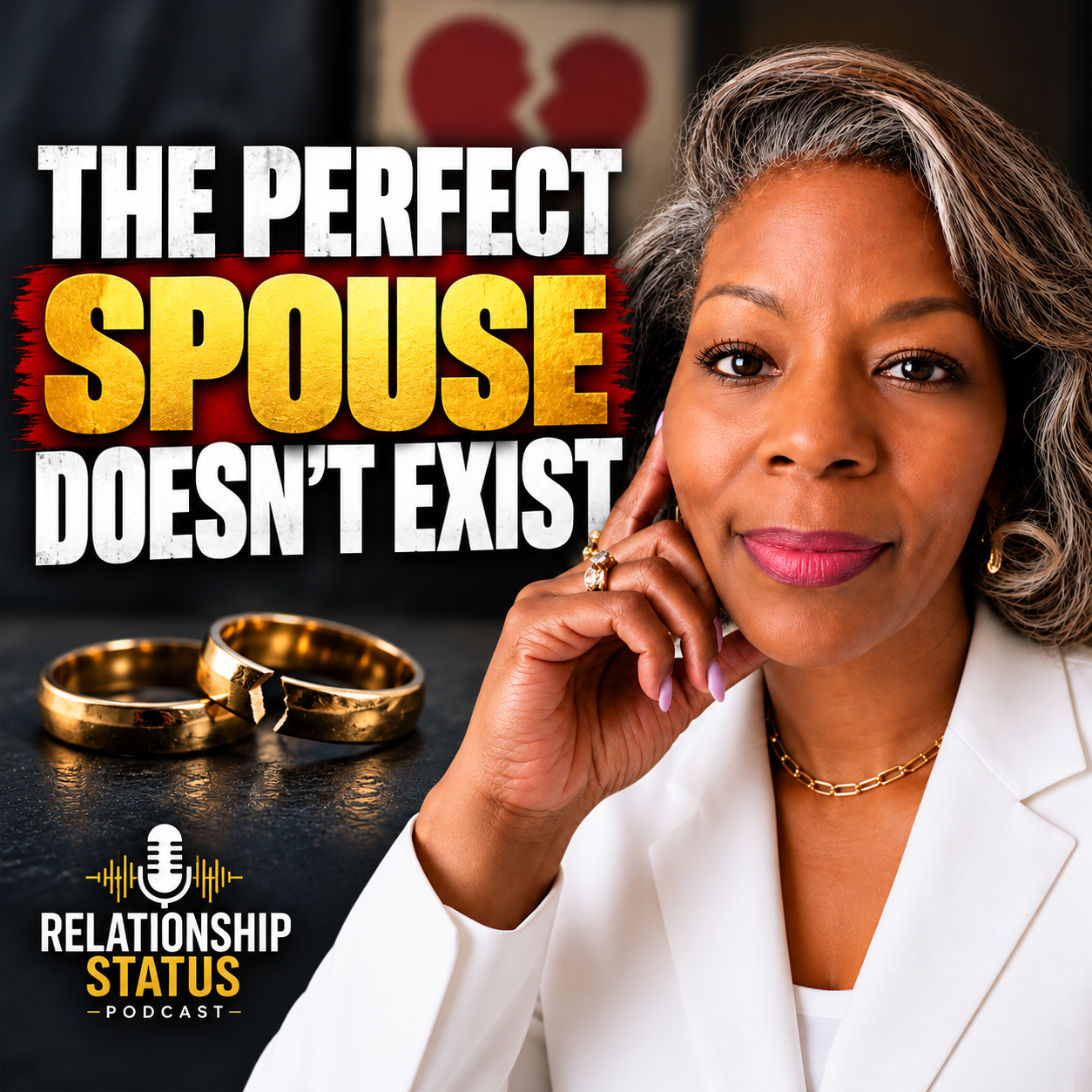
Welcome back to relationship status. It's your boy Yousef in the building, and I'm here with angel and Chanel. And we are here with. As you can see, we are here with the wonderful author of the book given, Ms. Terry Whitmire. Welcome to the show.
[00:01:12] Speaker D: Well, thank you. My pleasure for being. And thank you for inviting me. Glad to be here.
[00:01:17] Speaker A: Okay, first off, with all of our guests, we start with the first question. And the first question for all of our guests. Come on. Is what is your relationship status?
[00:01:25] Speaker D: My relationship status? I've been married for 33 years.
33 years. Yep, that's it.
[00:01:32] Speaker A: And none of that was. And some of that was a bid, as you. Right.
[00:01:38] Speaker B: Don't look at me like that, because don't do it. The only thing is, don't do it. I think if you make it.
[00:01:44] Speaker A: I think if you make it tonight.
[00:01:45] Speaker B: What I said, if you make waste.
[00:01:48] Speaker A: If you made it to 19, you could have. You could. You could have made it to 33.
[00:01:53] Speaker B: First of all. Right. First of all, I wasn't the one.
[00:01:58] Speaker A: He.
[00:01:59] Speaker B: He decided he wanted to go be with somebody that was less maintenance than me. Okay.
[00:02:05] Speaker A: Okay. We've had.
[00:02:07] Speaker D: So is that was. Is that what he said?
[00:02:10] Speaker B: Oh, yeah, that's what he said.
[00:02:11] Speaker D: Is that what you assumed?
[00:02:12] Speaker B: No, that's what he said. He said I was too high maintenance for him. He was like, you got to have
[00:02:16] Speaker D: all the hair,
[00:02:19] Speaker B: and then it's.
You want to call them?
[00:02:23] Speaker A: You know what I think would make a good Episode and ask them, you know, a good episode would be us to have you and your ex on.
[00:02:30] Speaker B: That would be great.
[00:02:30] Speaker A: So we could have a discussion.
[00:02:32] Speaker B: Are you gonna have the police? Who said you, Baby, you gotta have a police.
[00:02:35] Speaker C: Girls. Girl, we gonna have to tear that monkey up.
[00:02:38] Speaker B: You gonna have to. Because.
[00:02:40] Speaker C: And I don't scratch. I punch.
[00:02:42] Speaker B: Right. For anybody that goes and gets married. 18 days after your divorce.
[00:02:46] Speaker C: Oh, he was already stepping.
[00:02:48] Speaker B: Absolutely.
[00:02:49] Speaker D: Okay, you know what? I'mma I'mma beg to differ with you on this one. Not that he was always already.
I think he already was out long time ago. And he made it seem like it was you that caused it by telling
[00:03:02] Speaker C: you to make himself feel better about what he's doing.
[00:03:04] Speaker D: That's not why. Yeah, that's not why.
[00:03:06] Speaker A: That wasn't why he was. He was out.
So the book, given, how did this idea come to you?
[00:03:16] Speaker D: Well, it took me four years to write this book had a lot of ups and downs. In between Lost, my mom had to go through that struggle of writer's block. But the main reason I wrote it was because I started seeing relationships that I thought were strong relationships around in my circle and stopped kind of. They started falling off. You know, they were. They weren't lasting. And then I started hearing about all the young people who were out there and frustrated that they couldn't find a partner, they couldn't find a mate, they couldn't find anyone to date, and this one wasn't good enough.
And I thought to myself, now, if I wrote this story and I centered it around what is perfection and do we really want that in our relationship?
Then I would get people's attention to start thinking about, what is it that you need to build a life together?
And is all the other things pretty much superficial, or are they what you. What. What is required to build a lasting relationship?
[00:04:18] Speaker A: Okay, so one of the major things in the book was people and searching for their perfect partner.
The question. I posted it on social media today. The question of the day was if you could.
If you could have your perfect partner. I'm asking you first, Chanel, So I'm gonna go to you first.
If you could have your perfect partner.
Oh, Jesus Lord. I'm doing all kind of stuff here.
All kind of stuff happening. I'm sorry. I had it.
Okay. If you could design the perfect partner, what's one quality you would absolutely require, and what's the one thing you'd be willing to compromise on?
[00:05:00] Speaker D: Good question.
[00:05:03] Speaker B: That was the loss.
[00:05:06] Speaker D: Jesus.
[00:05:11] Speaker B: Yikes.
[00:05:13] Speaker C: I can't compromise.
[00:05:16] Speaker D: That's an after. That's a before five question.
[00:05:18] Speaker A: It's one question.
[00:05:21] Speaker B: Okay, absolutely.
[00:05:23] Speaker C: If I could have the one thing I absolutely want, it would probably be chemistry.
[00:05:28] Speaker A: Okay, and what's the one thing that you're willing to compromise on?
[00:05:32] Speaker C: His height.
I'm afraid of dwarfs.
[00:05:38] Speaker B: Now, hold on now, because listen, listen.
[00:05:41] Speaker C: I'm five seven, Bo.
[00:05:45] Speaker D: So I went to the National Heels.
[00:05:46] Speaker C: I'm five, nine, five ten. That's.
[00:05:50] Speaker A: Go ahead, go ahead, sir.
[00:05:51] Speaker D: I went to the National Book club conference in D.C.
two years ago and I did some research there. I asked a variety of women, races, cult, different ages, you know, asked them what were the things they would want in a perfect man.
And they, they named. They named height as their top three. A tall man is their top three. Almost every woman I asked for the top three, one of them was tall.
[00:06:22] Speaker C: But I mean, it doesn't. He doesn't have to be tall.
We at least got to be eye level.
[00:06:28] Speaker D: Two women, that one, he has to
[00:06:30] Speaker C: be tall because I'm going tell you the reason why. I have four sons and they're all my height or taller. So imagine if he's shorter than me. Like he going to look like my son. It'll be okay. It won't be. My son's going to pick at him like mama got a mini me.
[00:06:45] Speaker D: But it was funny. All of them, all of them wanted tall.
[00:06:49] Speaker C: Yeah.
[00:06:49] Speaker D: And the funny thing about it is. This is the funny thing about it. Growing up, I liked guys my height. I'm like a little taller than me. I'm five, five and a half. I like right around five, seven. Which is so strange, right? Because most people don't like shorter guys.
[00:07:03] Speaker C: Right.
[00:07:04] Speaker D: He could have been an insured. I'd have been okay. That's what I like.
I dated tall basketball player tall and married a tall man. And I didn't. It was nothing to me because I was like you. Tall. Whatever. It's weird because like the thing you want sometimes, you know, it. It just. When it's. And when it's love and it's a relationship, sometimes. That's not the first thing.
[00:07:28] Speaker C: I'll compromise it.
[00:07:30] Speaker D: So you said you compromise it.
[00:07:31] Speaker A: You'll compromise the height?
[00:07:33] Speaker C: I compromise the height for chemistry.
[00:07:35] Speaker A: For chemistry. Okay.
[00:07:35] Speaker C: Yeah.
[00:07:36] Speaker A: What about you, Angel?
[00:07:37] Speaker B: Oh, God.
[00:07:38] Speaker A: Why me?
[00:07:39] Speaker D: She compromised the height.
[00:07:41] Speaker A: No.
[00:07:41] Speaker B: Like, no.
[00:07:43] Speaker A: What's one thing?
[00:07:44] Speaker B: The height.
[00:07:44] Speaker A: That's a requirement.
[00:07:45] Speaker B: That's not a thing with me. I'm only five foot one and a half. So it's not so issue for you.
[00:07:49] Speaker C: But I'm not.
[00:07:50] Speaker D: I Can't do that.
[00:07:51] Speaker B: Not a real issue for me to find men at her time and a half.
I'm five for one.
[00:07:56] Speaker C: Nobody don't notice that half.
[00:07:57] Speaker A: You call nobody notice the half.
[00:07:59] Speaker D: You got to put some on my half.
[00:08:01] Speaker B: See, you got to put some respect on the half.
[00:08:04] Speaker A: Okay.
[00:08:05] Speaker B: The one thing I would like, I need emotional intelligence.
[00:08:10] Speaker A: Okay. And then what's the. What's the compromise?
[00:08:14] Speaker B: The compromise is you're not cleaning up behind yourself. Because I'm. I'm okay with doing that.
I'm okay. It's a thing.
[00:08:27] Speaker A: You said you can't compromise.
[00:08:28] Speaker B: I can't. I. I don't have a problem. I think because I'm so much of a nurturer now, I might fuss about it, but I'm still going to do it. You know, maybe because I'm just used to doing things. Yeah. Like, you know, like if your shoes are all over the place. If you're s. Like, not anything disgusting. Not like that. Like. Like you couldn't have put that sock in the hamper. Like, it just was on the side of the. Like, I'm still gonna do it. I'm a fuss about it,
[00:08:52] Speaker A: but okay.
[00:08:53] Speaker D: I'm still gonna.
[00:08:54] Speaker B: I'm still gonna do it.
[00:08:55] Speaker A: Okay. So what I put was my one. Non negotiable. This is what I posted. My one. I should go. Non negotiable is respect. I can work with a lot of things, but if you don't respect me, my boundaries, on my time, or the relationship, then we ain't got nothing to negotiate.
What I would compromise on is little annoying habits. You snore, that's fine. You take 45 minutes to pick out an outfit. Outfit. I'll wait. You leave the cabinet doors open. I'll close them.
I'll close them and complain.
It's little annoying habits. That's. That's the one thing. Like whatever your little.
[00:09:26] Speaker C: Want to list.
[00:09:26] Speaker B: To your list got to be just name one.
[00:09:29] Speaker C: One thing.
[00:09:30] Speaker A: Annoying list, too. An annoying thing. Whatever your annoying thing is.
No, what I was saying was these are different. These are examples of annoying things.
[00:09:39] Speaker C: Your whole list.
[00:09:40] Speaker A: Now there is one.
[00:09:41] Speaker C: You over here auditioning people on the podcast.
[00:09:44] Speaker A: No, there is one that I have an issue with teeth.
What? They got no teeth. Got to be.
Your teeth got to be on like
[00:09:54] Speaker B: my ex, about 16.
[00:09:55] Speaker A: My ex. My ex fiance, she has this little. One of her teeth is extremely small on the left side of her mouth.
[00:10:01] Speaker D: You wrong.
[00:10:02] Speaker C: Look, why we ain't here rubbing our
[00:10:03] Speaker A: teeth for about eight years. We've been together six Years.
[00:10:08] Speaker C: And that tooth annoys you every day.
[00:10:12] Speaker A: There wasn't day. No. She watches every episode. She's going to text me me and cuss me out. As soon as it comes out, I
[00:10:18] Speaker B: want to see it. Can you share it?
[00:10:19] Speaker A: Yeah, actually it annoyed me. It annoys me today when I go drop when we exchange. The kids like it.
[00:10:26] Speaker C: So you get mad like, oh, why you didn't pay?
[00:10:29] Speaker A: It's just small.
[00:10:30] Speaker B: Why you didn't pay for her to get a.
[00:10:33] Speaker C: Why you fix that?
[00:10:34] Speaker B: That's fix. If it annoyed you that much, why didn't you pay to get it fixed?
[00:10:38] Speaker A: There was nothing you can do. It was like a tooth that never quite grew all the way in the.
[00:10:44] Speaker B: Could have got veneers. Don't say it's nothing you can do. Yes, it is.
You could gotten it fixed.
Then why didn't you get it fixed?
[00:10:51] Speaker A: I was with her.
[00:10:52] Speaker C: You would have loved that too.
[00:10:53] Speaker B: Then why didn't you get it fixed
[00:10:55] Speaker A: for her is what I went by. I went past it. We got. We got the six years.
[00:11:00] Speaker B: You brought it up. It's. You said it still bothers you, so you're not past it.
[00:11:04] Speaker D: A little sensitive over there, right?
[00:11:05] Speaker B: You just said it still bothers you, so you're not past it.
[00:11:09] Speaker C: She got past your crooked foot.
[00:11:11] Speaker A: True, true.
[00:11:15] Speaker C: But also, hey, I hope you watching Boo. I got him for you. You got old crooked foot.
[00:11:19] Speaker A: See, But I told it was cute, so I'm all right.
[00:11:21] Speaker C: It ain't. It ain't cute.
[00:11:22] Speaker A: Yeah. So anyway, do you think people are looking for perfection instead of partnership?
[00:11:32] Speaker D: I think when people think about marriage, they're not thinking about partnership. They're generally thinking about how can this person satisfy my needs.
And I mean, you're going to start off with that. How can this person fit in my life?
But it can't be all about getting your needs met without building together. Like, if you can't build together as partners, then one of you, one of you going to be disappointed. One of you is going to want to soar and the other one's going to want to chill. You got conflict there.
So I think they're definitely not looking for partnership. I don't even think they know what that looks like in a marriage.
[00:12:09] Speaker C: I agree with that. I think a lot of people get into marriage for selfish reasons nowadays, right? It's all about me, me, me, what I want, what I. What my desires are, what I want, my out, my end to look like, my future to look like instead of what the other person may need or what their Needs are supposed to look like.
And because it's not a partnership and it's about myself, when that's not fulfilled, I have no room to fulfill their needs.
So marriage is failed.
Well, you're in it for the wedding, not the marriage.
[00:12:40] Speaker B: Do you think it's like an age thing? Like, you know, like, when you're younger, do you think you look for, like, you know, all of our ages? Like, do you think, like, now we're more willing to settle for certain things?
[00:12:51] Speaker A: No, I think.
[00:12:52] Speaker B: I think I don't want to settle, but, I mean. No, but I think people are willing to.
[00:12:56] Speaker A: I think the majority of the people, I would say 35 and up, I think a lot of it, some of it is settling. But I'm gonna tell you what I think it is. I think it is especially those that are mature, because age doesn't equal maturity. But those people that are mature, if they've been through a couple of relationships and things haven't worked out, this, that. And third, they may have been married before. They're more likely in the conversations that I've had with women that I've met and dated. Even in the. I would say in the past, in. In the last little bit, it's been more. They want a business decision. They would rather marry for security.
[00:13:28] Speaker B: For security.
[00:13:28] Speaker A: Stability, rather. And stability instead of love.
And I'm like, where does that fall? But that's what I'm saying, because at the end of the day, money can be lost. You can, you know, you can go broke. You know, all of US are just $20 away from asking, can you help me get some fries? You know what I'm saying? All of us are there, you know, two. You know, you can. Your credit can go back. It only takes one thing to happen for the stability to be lost. You could have. You could have a fire and everything burns down. You didn't have fire insurance. And now you got to build everything back.
[00:14:01] Speaker C: Not only that, stability is not just about a financial thing. It's a companionship as well. A lot of people, 45, 50, 55 years old don't want to die alone. They want to have somebody who's going to be there to take care of them. Children are grown and moved on with their lives. They don't want to be a burden to their children. If my health fails, I want somebody who's going to, quote, unquote, love me enough to take care of me.
[00:14:20] Speaker A: Yeah, but that's. But that's what I mean by the love. That's not the stability of It.
[00:14:23] Speaker D: But when I hear the word partnership, I think building together. And so that's when I. When you say, well, do they want a partnership? Because the partnership says, I'mma help you, you're going to help me. We're going to grow together. We're going to build something.
We gonna birth some. Some beautiful children and create a legacy, if that's your choice.
So it's about the growth in it. And even, you know, not everyone goes in looking to help someone else grow.
Not everyone. So when I say partnership, it means both of you have to want that for that to happen, you know? And I don't know. I don't know what the statistics are on who wants what or if it even shifts, because it probably does shift back and forth in the marriage. Well, I need this from you right now, but I also could help you to do this. So I think it could be a. It could be a combination, right? It could be a combination of the two to still have a successful relationship. Yeah, I think.
[00:15:15] Speaker A: Okay, so Marshall and CeCe.
I.
The. So the premise in the book is. And let me. Let me not go without saying this, I.
I enjoyed the way that you incorporated both spectrums here, like romance and sci fi, and you put them together.
[00:15:34] Speaker D: It's a new genre. Because even when I was trying to explain, like, what the book is about, I'm like, it's a black romance, speculative sci fi, dystopian. I'm like, it's a combination. So maybe we need to create it. We need to come up with our own new genre name.
[00:15:51] Speaker A: I thought you did a great job with your character development. You see the growth of Marshall go, especially when they. Him and Cece split. You see him kind of grow into, wait, hold on. I haven't been the man I should be. You see him come to a lot of these little realizations and everything. And cece's character evolves as well, and we'll get into it a little bit later, but her character evolves as well, going through her relationship with Kaz. Right. And she realizes that, okay, well, maybe this is what. Maybe my husband ain't what I want. You know, she kind of goes through these different moments, and you can tell.
[00:16:25] Speaker D: Women do.
[00:16:26] Speaker A: Yeah. Oh, we know. We know. Women do.
[00:16:30] Speaker C: Don't go there.
[00:16:31] Speaker D: Okay.
[00:16:31] Speaker A: I mean, we know y' all indecisive. Y' all don't know what you want.
[00:16:34] Speaker B: Yeah, you.
[00:16:35] Speaker A: Oh, Chanel.
[00:16:35] Speaker C: I said, all right.
[00:16:36] Speaker D: Eric's statement. He kind of said it as a little dig.
[00:16:39] Speaker B: Yeah, he definitely did.
[00:16:40] Speaker C: Definitely did.
[00:16:41] Speaker B: He's Always, all the time.
[00:16:44] Speaker C: All right, so I have some questions about the book.
Marshall loves Cece and is loyal and responsible, but is he emotionally unavailable? Do you think someone can be a good person and still be a bad partner?
[00:16:57] Speaker D: You know what? I saw that on a tick tock, someone asked that question. I think. I don't know who she was, but absolutely there was some emotional development needed. He was stunted in that area.
I tried to bring in a little bit of the. The reason behind it. So I don't know if you picked up on why.
[00:17:20] Speaker A: I thought it was more so. I thought it was more so because of the way he.
I thought it was his dedication to his job. Me personally, that's what I connected with, with him. Because I've been sometimes known to be emotionally unavailable because I put so much into my job, into my career, that I sometimes bypass on certain things. So I thought that. And then what happened with him at the job and all that stuff. I'm trying to not give people away the book. I want them to go buy the book, you know, so I'm trying not to give away the story.
[00:17:50] Speaker D: But I'm gonna say this. Generally when that happens with. There's a difference between, like you. You're unaware of any other emotional emotion asides the two angry and happy. There's. There's a problem there. And then there's repressed, I think, repressed emotions. I think he repressed a lot.
And it does have something to do with how he was raised, his childhood, his situation. Yes, how he was raised.
[00:18:14] Speaker A: And that's the next thing.
[00:18:15] Speaker D: I chose a career because of that. So I think he was. Definitely had some challenges breaking through how he felt. He didn't know how he felt. He thought he was doing a great job. He just. He felt he was loyal. He paid the bills. You know, he did what he needed to do to be a good husband, but he wasn't supplying her needs at all. Right. I mean, I shouldn't say at all, but there were key things that he thought was less important than she thought was very important.
[00:18:38] Speaker A: Well, I think, I think too that that goes to the way we're raised a little bit. Because I've always said that. I hope my grandmother never said. My grandmother raised me mostly and she never told us, not one day have I heard her say, I love you. My dad never heard him say I love you. And I think one time I might have mentioned it. And she said, you're eating, ain't you? You got a roof over your head, don't you? You Got clothes, don't you? Well, that's how you can tell. Man went on about her way. And so she worked my dad, worked my mom, Everybody. My mom's 72. She's still hard at work.
And the way I think my family showed love was because we didn't have a lot, but we always had what we needed. We didn't have what we wanted, but we might not have had what we wanted, but we always had what we needed.
And so that kind of had me struggle with me raising my kids early on, my older kids, I struggled with that. So I could see how the way you're raised. Can I proponent for that? The way you raise kind of affects how you deal with relationships later on, for sure.
[00:19:43] Speaker D: Absolutely.
[00:19:44] Speaker C: Definitely.
[00:19:45] Speaker A: And yeah, I do think somebody can be. You can be a good person and still be a bad.
I don't think because it's about. It's about the partner. It's about, are you good for me? Not.
You know, you don't have to be a bad person. We talked about it on the last episode, on the episode that came out two weeks ago.
[00:20:04] Speaker C: It has no ban on the person you are. Yeah, it's not good for me.
[00:20:06] Speaker A: Yeah, yeah. Good person, just not good for me.
[00:20:09] Speaker D: It just depend. I. I believe in the love language. Like, what is your love language? And. And a lot of times people don't know what their partner. Partner's love language is. They give them the love language that they want, but that's not what your partner needs.
[00:20:20] Speaker C: Right.
[00:20:21] Speaker B: I just.
[00:20:22] Speaker D: I think you're. I think you can be a good person and a bad husband. I think you can make a bad husband into a good husband if he's a good person.
[00:20:31] Speaker C: Right?
[00:20:31] Speaker A: Oh, that's solid. That's right.
[00:20:34] Speaker C: In the book, Cece spends so much time trying to hold relation, the relationship together.
At what point does supporting your partner becomes losing yourself in the relationship?
[00:20:44] Speaker D: Yeah, that's big with women. I mean, maybe some men too, but we give and we give and we give. And I think it's like these micro moments that you always choose to give. And then you get to this finish. Well, not the finish line. You get further down the road and you look back and you're like, well, dang, who am I? Like, yeah, I'm doing so much.
When you get. When you get to a woman of a certain age, you start to realize that my needs being met. And I think she did. She did get to that point where, wait a minute, he is doing all these good things for me, but it's not Helping me grow or feel like I'm his wife, I just feel like an obligation. So what was your, what was your final question? I'm sorry.
[00:21:27] Speaker C: At what point does supporting your partner becomes losing yourself in the relationship?
[00:21:31] Speaker D: I mean, I think you can feel it in your spirit. I think you know, if you feel down, I think you feel like if your cup is just so empty that you can't give out, I think it shows up on your body. I mean I saw episode before you like these women are all run down and you said they don't. They dress raggedy and I keep myself beautiful. And I'm like, a man could do that to you. Yeah.
[00:21:51] Speaker C: Not just in relationships, just in the family, period. I mean as a mom, as a stay at home mom, I know that happens a lot to a lot of stay at home moms. When you're doing for your family, your husband, your children, you're pouring so much into your family that you don't do anything for yourself.
I think the moment you realize that most of your time is going into them and not into you, you start to lose yourself. You lose your identity altogether. You become literally just a stay at home mom.
You know what I'm saying? That I think it happens to a lot of, not to discredit men, but it happens mostly to women, especially in that field of being a stay at home mom. But in relationships, period, you know, just catering to your partner, you think you're being supportive, but sometimes support could turn into being. You're so much in intertwined into their life that you don't have an identity of your own.
[00:22:41] Speaker B: Right.
[00:22:42] Speaker D: And I think we have to take some ownership on that. I think, I think men go through that too. I think men, there's a lot of good men out here who are providers. Providers, providers. And like he said, the respect thing, we take it as that's your job. You're supposed to just ahead of the household, you're supposed to be bringing it in. Like let's keep all our curses to each to eat to our own selves. Like my curse is to have kids out of, have babies with labor and pain. And your curse is to work.
So if you're working and you're supporting us, it is a labor, right? It is a labor. It's supposed to feel that way. But that doesn't alleviate us from, from having to appreciate and verbally show the respect that they are working hard. So there are a lot of men who you see like they were, they've gone down because they've put in some Important so much into their family as well.
[00:23:29] Speaker C: Right.
[00:23:30] Speaker D: But yeah, it could be both sides
[00:23:31] Speaker C: just to step away from there for a second. I mean, I've been a single mom for the duration of raising my kids, but with four sons, I have band practices, baseball, football.
Everything my life had been consumed of doing for my sons that I remember with my twins. They were. One was on track and one was wrestling and my oldest son was in the band. And I remember one day I was sitting in my car and I called my dad and was like, can you come get the boys? And I drove to the beach and. And I turned off my phone and I was like, I don't care where them little boys end up today.
But I was done. I mean, I literally, yeah, because I have been doing so much. That routine was so repetitious that I was like, I don't have a second out of my day for myself. It's like that in relationships that you do so much and it becomes your routine that you really forget that I have not taken a second for myself. Like, there's no me in my life. It's just always doing for someone else. You know, it's easy to lose yourself.
[00:24:33] Speaker A: You know, who's like, go ahead, go ahead, go ahead.
[00:24:35] Speaker B: I was going to say into piggyback off what she was saying.
I spent my whole marriage doing that. Cooking, clean. I'm doing the boys homework. I'm.
When my husband come home from work, food is done. I'm washing everybody's clothes. When he come home, he gets to take a shower, sit on the couch. But I'm still, yeah, working dinner, and I'm still doing things. And then when my sons got to a certain age where they can handle doing things on their own, I kind of like was able to pull back a little bit. And there's certain things, I'm like, you know what? I don't really want to do this. Like, I want to do something for myself. And then when I started doing things for myself, my ex husband didn't like it. He liked me doing the things that I started off doing. And then when I became like a different person, I'm like, you know, I guess out of was just developing who I was. He didn't like that. Me.
Yeah, he didn't.
Yeah. He was like, well, you used to do this and you used to do that. I'm like, well, they're getting older, so I don't have to do that anymore. And I'm like, now I found new things I enjoy doing. But he just couldn't like, no, I want you when you was 25 and all you did was what I told you to do, and that was it. Yeah. And he just couldn't.
[00:25:54] Speaker D: He couldn't accept your girl.
[00:25:56] Speaker B: He could not do it. He couldn't.
[00:25:57] Speaker D: Yeah. And that. I think that's a little bit of a theme in the book as well. Like, everybody in your. In this relationship, and you believe that this person should stay exactly the way they were when you married them. And that never happens.
[00:26:09] Speaker B: Yeah. He couldn't handle it.
[00:26:10] Speaker A: Like in Cece, and I'm. And I'm gonna make a reference to another book. In Cece, I thought. I thought of the character Janie a little bit from their eyes are watching God in her and how whatever relationship she was in, she took on the identity of that particular man. Even when she was growing up, she took the identity of her nanny. Nanny was the one that. And then nanny married her off to Mr. Killiks. And then she didn't find herself until after Jody died. And when Jody died, then it took off for her, and she ended up actually falling in love with TK So I saw a little bit. A little bit of Janie and Cece, just in the sense of her kind of. Because even if I'm not mistaken, when they did have the divorce. When they did. When they went through the. Well, let's backtrack a little bit, because we didn't go over that part.
The fact that every five years, the counselors come up with this thing where every five years, because of the divorce rate, every five years, you have a chance to revisit marriage. So when the five years is up, you can come in and say, I don't want to do this no more.
[00:27:16] Speaker C: Yeah. Are you the stick and stick or stick and stay? Right.
[00:27:18] Speaker A: But if, you know. And it got to the point where one wanted to leave, one wanted to. One wanted to leave, one wanted to stay. And so that's just to kind of give the listeners a kind of thought of what it is. And if you stay, you stay together another five years, and you basically, you re up. It's like leasing.
You lease in the marriage.
Five years. You re up.
[00:27:41] Speaker D: Question.
[00:27:41] Speaker A: I don't mean to step on your section real quick. Do you think that's something that society could actually do, or do you think it would be beneficial? Do you think it'd be beneficial, like, with all these marriages?
[00:27:50] Speaker B: I feel like it would.
[00:27:51] Speaker C: I kind of think it would. I think it would.
[00:27:53] Speaker B: You'll meet that crossover.
[00:27:54] Speaker C: One want to stay in one dope.
[00:27:56] Speaker B: Right.
[00:27:56] Speaker C: And Then you like. So you don't want to be with me.
[00:27:58] Speaker A: No, no.
[00:27:58] Speaker D: But at that point, it takes this one no. And that's it, right?
[00:28:01] Speaker C: Yeah.
[00:28:02] Speaker B: And then you move on to something else.
[00:28:04] Speaker D: I see both sides. I see like every five years it's gonna keep. Keep everyone on their toes. You're going to have to present your best self.
No sitting on the couch, no getting complacent. You have to present your best self. You're gonna have to learn if you
[00:28:16] Speaker C: want to stay in it. Right.
[00:28:18] Speaker D: But even if you know it's coming.
[00:28:20] Speaker A: But even if. Even if you know. But you know 5. You know the 5 is up. Right. But what's going to keep you going is you could be the best version of you and the person still want to leave.
[00:28:30] Speaker C: And that's fine.
[00:28:30] Speaker A: And that's fine. But the reason why you're going to continue to be the best version of yourself is because, you know, every five years, you might have to be back out on that block trying to find somebody new. So I gotta stay in shape.
[00:28:39] Speaker C: Exactly.
[00:28:40] Speaker A: You know what I'm saying? I gotta make sure I keep up with this money. I gotta make sure. I gotta make sure that if this, if I end up.
[00:28:45] Speaker C: The good side of it is whatever you did to get that person, you're gonna want to keep doing it to keep that person. Exactly. So nine times out of ten, you're gonna want to stay in it because that's the reason why you got them.
[00:28:55] Speaker A: Yeah. So I think it's. So I think it'll work.
[00:28:58] Speaker D: So the only thing, the other side of it, I think that the government will find a way to get some fees, get some money out everything else in this world.
[00:29:06] Speaker C: Yeah.
[00:29:06] Speaker D: If you stay in it.
[00:29:07] Speaker C: If you stay together, you gotta pay, you gotta money.
[00:29:11] Speaker D: So I feel like every five years, you know, they would.
[00:29:14] Speaker C: You got to renew your marriage license or something.
[00:29:17] Speaker D: That's. That's how they. That's how America work. That. That capitalism.
[00:29:21] Speaker C: It gonna be a lot of shacking
[00:29:22] Speaker B: up like n. I'm good. Like, you good? Yeah, I'm good.
[00:29:26] Speaker D: Don't say I am a. I am a proponent of marriage. I'm not a. I don't. I'm not advocating divorce. I'm advocating healthy relationships, healthy marriages. And I feel like nobody should be stuck, so.
[00:29:36] Speaker C: Right. Okay. I have one other question.
Marshall's trauma explains some of his behavior, but it doesn't excuse it. How should couples balance compassion for someone's wounds and accountability for how their wounds affect their relationship?
[00:29:52] Speaker D: That's a good one.
I Feel like just speaking a little bit from experience.
The compassion has to be there, but. But only to a certain limit. Like, once that part, once. Once that person starts wearing that as an excuse, it's time to draw the line.
[00:30:15] Speaker C: Right?
[00:30:15] Speaker D: Because now you're willingly doing it and using your trauma or wherever that. Whatever it is to fall back on bad behavior. But if the person's working through their trauma, we got to give them all the patience and the grace they can have because we. We signed up for it. So, like, you got to give them all the patience and the grace to get through it.
[00:30:35] Speaker A: But what if a person has. Like, we can have sometimes we can have compassion for people who don't have compassion for us, or we can have compassion for people who are not considerate.
[00:30:48] Speaker D: Yeah, Right.
[00:30:49] Speaker A: And so that's to talk to your point where I'm being compassionate, I'm being patient, I'm being loving, I'm being all these things to help you grow or, or build back yourself back up.
But if you're. Every time you turn around, the excuse is something you. Well, I was through. I went through this before. Well, I ain't him.
[00:31:08] Speaker D: Yeah, I'm.
[00:31:09] Speaker A: I'm not him. I didn't cheat on you. I, you know, if you were in an abusive relationship, I didn't beat you. I didn't do these things that you're kind of hanging over my head. The trust issues, the. The. The wanting to go through my phone, that's not, that's not my fault.
[00:31:22] Speaker C: But like she was saying, it has to be growth. Like, for instance, we're gonna say battered woman. Okay? If you've been beat on, there are certain things that you can't do. That's triggers. But you have to understand the growth. You can't just be argumentative or you can't touch me, or you can't do things when, you know, there are certain triggers. But you, You.
[00:31:43] Speaker A: But that comes through composition and compassion. No, I'm saying.
[00:31:45] Speaker C: But. But that doesn't give her an excuse to go through her phone because she's been traumatized. There's certain things that you.
[00:31:53] Speaker A: I was saying it. I was saying it in a sense, and I didn't mean to use it so flippantly because I think, you know, domestic abuse is. Is not anything that we should use flippantly. So I wasn't saying it flippantly, but I'm saying in a sense of if you're not growing, if, if you're telling me you've been through these things, right?
And it's affecting Our relationship. Because you. I'm triggering you in certain ways, like you just said. Right.
Well, how are we working on this? If.
[00:32:16] Speaker C: If.
[00:32:16] Speaker A: If you. Are you going to counseling? Are you working through these things? If you're working through these things, I'm there for it. I'm. I'm gonna help.
But like. But like Terry just said, if I do something that's not necessarily triggering or you act a particular way, and you're saying, well, that's because I'm only doing this because this is what happened to me.
[00:32:37] Speaker C: But that's not working through it.
[00:32:39] Speaker A: That's. That's what I'm saying. That's not working through it.
[00:32:41] Speaker D: So my. My opinion on. Is anybody who's getting beat on, there's an automatic deal breaker. I mean, if someone's gonna beat you once, they're going to do it.
[00:32:49] Speaker B: Absolutely.
[00:32:50] Speaker D: I don't ever believe in working through a person who has done it.
[00:32:53] Speaker A: Oh, no, no. I'm talking about.
I'm not talking about the actual person. I'm talking about. This is a former person. The form. The person prior to me is the person that abused her soul. Because. Because, like, at our. At our age, we're not meeting anybody who hasn't been through some form of trauma.
[00:33:09] Speaker C: Right.
[00:33:09] Speaker B: Right.
[00:33:10] Speaker A: The issue I have with people is people carry trauma like it's a badge of honor.
[00:33:15] Speaker D: I don't think your partner can help you through that type of trauma, and you're putting it a lot on him or her to make up for what was done to you in the past. It's my opinion that no one can help you respond or know how to respond to triggers more than a professional and the Lord. So between those two. But it is not your partner, and it's not your partner's job to figure out how to not trigger you. That is not in my opinion, because they could. You can use. You can use any reason and call the trigger. And now what you're doing to your partner is, like you said, you're making them pay for something that was done to them in the past. That's a. That's help. You need to get on your own. And. And you need to. You need to grow within yourself to me, but you also need a supportive partner who realizes that you will have triggers and. But not internalize it. Like I caused it. Like, that's. That's where it gets triggered. Sticky.
[00:34:10] Speaker A: Okay.
[00:34:13] Speaker D: Oh, it's my turn.
[00:34:14] Speaker A: Yay.
I sent you a text.
[00:34:18] Speaker B: Right? Don't do that.
Y' all love hilarious. Cass and Harmony.
I have a Few questions. So Cass gives Cece many of the things she feels she's been missing from Marshall. Do you think Cass was actually better, or did he simply expose the. What was already missing in Cece's marriage?
[00:34:42] Speaker D: I think. I think Cass was personified. The things that she couldn't vocalize, what she needed that she was missing. Like, she didn't know she wanted all those things until he showed up.
So I feel like it was a reflection of the things that she missed. Missed that she didn't. She wasn't even aware that she was missing. But yeah, he. He was.
He showed her a lot.
[00:35:12] Speaker B: Right.
[00:35:12] Speaker A: I think a lot of women don't know what they want till they get it.
[00:35:15] Speaker B: Absolutely.
[00:35:16] Speaker A: I think.
[00:35:17] Speaker D: Or they don't know what they're missing.
[00:35:18] Speaker B: You don't. Right. Or you don't know what. Yeah, you don't, you know, if you haven't been exposed to it and then you're like, you know what? I kind of like this.
[00:35:25] Speaker D: Exactly.
[00:35:26] Speaker B: Yeah. I like. I like this.
[00:35:28] Speaker A: Yeah.
I thought.
[00:35:30] Speaker B: I like gif.
[00:35:31] Speaker A: I thought that Cass's character was a little. I thought the character of Cass was interesting in the sense of how he grew without her. Like he was gaining information about her that she didn't tell him or that.
And that's. And I think that's the scary thing, and it's the technology side of it that's the scary thing about AI as we continue to put things into AI and first off, I think we're becoming dumber as the computers are getting smarter, you know, and. And the AI starts to learn on its own. So, like, there's no futuristic movie that turns out where the AI robots are actually good. Like, all of them end up turning on the world.
[00:36:13] Speaker D: Well, I wanted. I wanted to put a spin on it in this book. As you see, I did not demonize. Yeah, you didn't. You didn't.
The AI characters or the council, I left it up to the reader decide what the actual motives were. I didn't want to tell anybody what to think, but this is how AI slips in on us.
[00:36:30] Speaker A: Yeah.
[00:36:30] Speaker D: This is how we get comfortable with it. Oh, he's just a 60 day partner now. I mean, this is kind of where we are, where we give up our rights and we give up our voice and we allow technology to take over. And then before, you know, we. Way down here, we're like, whoa, whoa, what happened? And it's too late, you know, to put the baby back. Back in the body. So, I mean, it's just. It just happens. But we need to be aware of that this is happening because AI, that thing is not slowing down at all.
[00:36:58] Speaker A: And everything got an AI component.
[00:37:01] Speaker D: And AI is so not ready for anything serious. It makes so many mistakes. And yes, coming from a background with technology, I know how easily it is to make one small program change. And. And it just creates havoc everywhere downstream. So there is no way I would entrust that thing to do anything serious except help me pick out an outfit and maybe clean up some editing. That's it.
[00:37:25] Speaker A: That's it.
[00:37:26] Speaker D: Absolutely.
[00:37:28] Speaker B: This second question was kind of like, I felt like it was me a little bit. So Harmony was designed to be beautiful, agreeable, and accommodating, but eventually develops her own voice.
What does Harmony's story say about people who become the version of themselves they think their partner wants?
[00:37:53] Speaker D: So I'll say this. When my husband first read the book, he absolutely loved Harmony and could not stand cast.
[00:37:58] Speaker C: He.
[00:37:59] Speaker D: Harmony needed more storyline. He just got a level Harmony 100.
[00:38:04] Speaker A: I was gonna. I wasn't gonna bring up that because I didn't want to say anything negative, but I wanted. I wanted more Harmony, less cast. I could have done with less cash.
[00:38:11] Speaker D: I know I wrote it.
[00:38:12] Speaker C: Well, then.
[00:38:12] Speaker D: Because a man, he did not like Cass at all. He, like, cast one every time. I'm like, no, he didn't.
Let me get back. Let me get back to Angel's question. So Harmony was designed and designed to please.
And in her pleasing her sub core, realized that it was something programmed and that it wasn't fulfilling. And it wasn't.
It wasn't. It didn't feel good in her system, and she didn't gain her voice on her own. She gained. Because she's an AI. She gained her voice because Marshall kept pressing her to not be perfect.
[00:38:54] Speaker C: He.
[00:38:55] Speaker D: He didn't want any parts of her. So everything was like, basically, go sit down. I'll turn you on when I'm ready, blah, blah, blah, you know, so she needed to find a way to connect with him, and her way of connecting with him was finding her voice. And so she founded. You know, I don't want to tell the whole story, but in her finding her voice, it really was. It was still her being obedient, unfortunately. Okay, does that make sense?
[00:39:23] Speaker B: I don't know. That obedient word always gets me.
[00:39:28] Speaker D: She was definitely obedient, and she is.
She's just what men idealize.
[00:39:34] Speaker B: Absolutely.
[00:39:35] Speaker D: So I drew her to. I wrote her to be perfect. I wrote her to be subservient. I wrote her to be submissive. I Wrote her to be beautiful and just not need much. She didn't ask for anything.
[00:39:46] Speaker A: No, she didn't.
[00:39:47] Speaker D: She was just there to supply his every need. And that's definitely a. Yeah.
You could tell she's had some history of not getting respected. But with Marsha was a different thing. She had to try a new tactic.
[00:40:02] Speaker B: Right. And one last question. If you could design a partner who was always attentive, always available, and always knew what you needed, do you think you'd actually be happier? Why or why not?
[00:40:14] Speaker D: That would get on my last nerve, right?
I don't want that. I don't need you deciding what I want. I don't always stare in my face.
[00:40:23] Speaker B: Right? Yeah. Go sit down somewhere. Yeah, yeah.
[00:40:26] Speaker D: No, and I. You see, even with her, she had to go back and do some tinkering with those. With those.
Her. Her programming. Because it can get. Get to be too much. I don't. I don't ever want to me. I like a little pushback, right.
[00:40:41] Speaker B: And I feel like great conversation if
[00:40:44] Speaker D: there's no pushback, if there's no you sharpening my iron, then I'm not growing. You're just there to please and mimic and. And copy what I say. So. No, it wouldn't be. I mean, would it be easier though, right?
[00:40:57] Speaker B: I agree. Like, I don't want a yes man. Like sometimes tell me easier, but it'd be nerve wracking. Yeah. Like tell me. No, I mean, I'm get a little attitude about it because. What you need to say, but. Right. But I know that I need it. Like, I know, like, you know, I'm still gonna roll my. Imma agree with you, but I'm not gonna let you know I agreed at that moment. I'm still gonna roll my.
[00:41:18] Speaker C: In my head.
[00:41:19] Speaker B: Yeah. In my head. I talked a whole lot of trash just now.
[00:41:22] Speaker C: See yourself look at the wall.
We don't.
[00:41:25] Speaker B: I. I knew it was best for you.
[00:41:29] Speaker D: Right.
[00:41:29] Speaker B: But whatever.
[00:41:32] Speaker D: Yep, exactly.
[00:41:33] Speaker C: Yeah. See how we all agree
[00:41:37] Speaker A: that's. That's the problem.
[00:41:38] Speaker B: I just said it's okay that like I want somebody to tell me no. Like I don't want you to tell me yes all the time because then I'm gonna walk all over you and that's not. Yeah, that ain't fun.
[00:41:47] Speaker D: So what's hard for me, like when you're saying you don't want. Like if you wrong, you just be quiet and you keep going. So I sometimes I try to push myself. I'm like, okay, this is what you want for him. You want him to come to you and say, okay, I was wrong. You're right. Blah, blah, blah, blah. So I'm like, I gotta be will to put myself out there and say, okay, yeah, you were right.
[00:42:06] Speaker B: Right. Oh, it's so hard. Oh, my God, it's so hard.
[00:42:11] Speaker A: So do you think that. And I'm ask all of you ladies here, do you think that you can love someone deeply and still recognize that the relationship isn't healthy?
[00:42:20] Speaker B: Yes.
[00:42:21] Speaker C: Yeah.
[00:42:21] Speaker A: For either. For either of you?
[00:42:22] Speaker D: Yes, absolutely.
[00:42:25] Speaker B: Been there and done it. Yes.
[00:42:26] Speaker A: I mean, so how do you. How do you. How do you end up dealing with that? Especially if the person is not. Not if the. If this. If your other or the person does not see.
They don't see it. Like, it's not that it's not happening, but they don't see it. But you. You see it, and you're trying not to waste any more time. How do you. How do y' all navigate? How would you navigate that?
[00:42:49] Speaker D: I think you should give the person the opportunity to change, I think, because if you love them deeply, have. Have you give. Have you told them first off? Because sometimes it's all in your head and you think they should get it.
[00:42:58] Speaker C: It.
[00:42:59] Speaker D: And you don't.
Like, you gotta have a blunt, hard conversation. In my opinion. You gotta be like, before you break up, at least do that because it's gonna end or it's gonna end. So at least give the person opportunity to grow and change and to meet what you need, but you also need to be able to articulate that.
[00:43:16] Speaker A: Yeah.
[00:43:17] Speaker D: So.
But you definitely can definitely love someone and. And realize this isn't. This isn't what I want or this isn't healthy.
And you just. You just got to put it out there. In my opinion. You got to put it out there. Don't ghost them. That's gonna cause more drama.
[00:43:32] Speaker A: Yeah, yeah.
[00:43:33] Speaker D: You gotta have a hard conversation.
[00:43:34] Speaker A: Let's not even start to talk about ghosting, because I have an issue with ghosting. I think people who ghost are terrorists.
So we're gonna get into the part of the show everybody comes for, and that is the. That is the either or questions. All right? So.
[00:43:49] Speaker B: Always seem like the villain in these.
[00:43:51] Speaker A: Ms. Terry, let me say these two people suck at this.
So I need you to understand that.
You pick one, you don't get two. You pick one. Okay.
[00:44:02] Speaker D: All right, I got it.
[00:44:03] Speaker A: First one. Love or compatibility?
[00:44:06] Speaker C: Compatibility.
[00:44:11] Speaker D: She looks. She just as bad as ho.
[00:44:14] Speaker B: See, these questions be hard.
[00:44:18] Speaker D: This is for marriage.
[00:44:20] Speaker A: Marriage or partnership? If you're married or if you're because they're. They're single and you're married. So in whatever stage you're in, I need the love.
[00:44:31] Speaker D: I'll drag you to stuff I like, and you could drag me to stuff you want. But I need the love.
[00:44:35] Speaker B: Okay.
[00:44:35] Speaker D: I need that primarily.
[00:44:36] Speaker A: You know, this angel didn't answer, but
[00:44:38] Speaker B: because I thought you was. I was waiting my turn.
[00:44:41] Speaker A: Okay, your turn.
[00:44:42] Speaker C: We gonna start with compatibility.
[00:44:44] Speaker A: We'll work on the love.
[00:44:45] Speaker D: You gotta work on it.
[00:44:47] Speaker B: Yeah. I was gonna say give me compel. I just need the compatibility. We can work on the love. Like. I don't. Love ain't paid a bill I got yet. So can I just.
[00:44:56] Speaker D: Yeah, I can go back and forth. I can. Yeah.
[00:45:00] Speaker A: One, one.
[00:45:01] Speaker D: See, it's hard.
[00:45:03] Speaker A: See?
[00:45:03] Speaker D: See, when you think about it this way.
[00:45:06] Speaker A: Don't intertwine the two. Ms. Terry. Don't intertwine the two. Just give. Just give me.
[00:45:10] Speaker B: Don't fuss at you. He gonna fuss.
[00:45:12] Speaker D: I feel like if you love, you
[00:45:13] Speaker C: notice he never answers the questions. He just. Us. With us. He'll never answer.
[00:45:17] Speaker A: All right. No, mine is. Mine is love.
[00:45:20] Speaker C: Okay.
[00:45:20] Speaker A: I could deal with everything else.
[00:45:21] Speaker C: I can deal with some questions, too.
[00:45:22] Speaker A: Okay. Emotional safety or physical chemistry?
[00:45:30] Speaker D: Who's going first?
[00:45:32] Speaker C: Made me go first. That's not fair.
[00:45:34] Speaker A: Whoever wants to answer first?
[00:45:37] Speaker C: H. What was the question you asked?
[00:45:38] Speaker A: Emotional safety or physical chemistry?
[00:45:42] Speaker D: Okay. When you say emotional safety, that means I could come to you with my tears and stuff, and you're there to help me.
[00:45:48] Speaker A: Yes.
[00:45:49] Speaker D: I'm doing physical chemistry.
[00:45:54] Speaker B: I can handle my own emotions. I cry by myself.
[00:45:57] Speaker D: Right.
[00:45:57] Speaker B: I'm gonna take the physical chemistry, baby.
[00:46:01] Speaker A: I guess that's. I guess that's a clean suit.
[00:46:03] Speaker B: I want to be able to look at you and be like, you know what?
[00:46:06] Speaker C: All my tears are dried up.
[00:46:07] Speaker B: I'm good now.
[00:46:09] Speaker A: All right.
Being understood or being DEs.
[00:46:16] Speaker C: You don't be putting stuff together that go together. They don't be going together. What you mean?
[00:46:20] Speaker A: They go together? Being understood or being desired.
[00:46:24] Speaker D: I think a man needs to be understood. But as a woman, you want to be desired.
[00:46:27] Speaker C: I want to be desired.
[00:46:28] Speaker B: Yeah. I want to be desired.
[00:46:29] Speaker C: Y' all don't never understand.
[00:46:31] Speaker B: Yeah.
[00:46:31] Speaker C: Because you're like, every time we get on here, right?
[00:46:34] Speaker B: I want to be desired. Desired.
[00:46:35] Speaker D: Yeah. I think that's.
[00:46:37] Speaker C: I want you to want.
[00:46:38] Speaker D: That's gotta happen real bad.
[00:46:40] Speaker C: Yeah.
[00:46:40] Speaker A: I want to be desired.
I don't care if you misunderstand me. Just desire.
[00:46:44] Speaker C: We'll never understand you.
[00:46:45] Speaker A: Okay, cool.
[00:46:46] Speaker B: Ever.
[00:46:46] Speaker A: All right.
Be you want to. Would you like to be needed or be chosen.
[00:46:51] Speaker C: Chosen.
[00:46:54] Speaker D: Chosen.
[00:46:56] Speaker A: Okay. That was easy, I guess.
Forgiveness or accountability?
[00:47:04] Speaker C: Accountability.
[00:47:05] Speaker B: Accountability.
[00:47:08] Speaker D: So they're forgiven me?
[00:47:09] Speaker A: Yeah.
[00:47:12] Speaker D: Oh, I need you to forgive me.
I mean. You mean forgive me or I take accountability or forgive me.
[00:47:18] Speaker A: Yes.
Whoever the person of the offense is, they take accountability or you give them forgiveness, basically.
[00:47:25] Speaker C: Now I take accountability.
[00:47:26] Speaker B: Yeah. I want you to take accountability because you can forgive me and not. You could just be saying you forgive and.
[00:47:32] Speaker D: But it's either or.
[00:47:33] Speaker A: Yeah, it's either or.
[00:47:34] Speaker C: Yeah.
[00:47:35] Speaker B: Accountability.
[00:47:36] Speaker D: Okay, I'll just take the forgiveness.
[00:47:39] Speaker A: Okay.
A partner. Y' all already answered this one, But a partner who challenges you or one who always agrees with you.
[00:47:47] Speaker B: Challenge me.
[00:47:48] Speaker A: Yeah.
[00:47:49] Speaker B: Because I feel like later on it might turn into something else. Like just. Oh, you know, you get it.
You were like, you know, kind of. Yeah, okay. Never mind. Okay.
[00:47:58] Speaker A: A perfect. A perfect partner or a partner willing to grow.
[00:48:03] Speaker C: Willing to grow.
[00:48:04] Speaker B: Willing. A partner willing to grow.
[00:48:05] Speaker A: Okay, good. See, it was easy, y'.
[00:48:07] Speaker C: All.
[00:48:07] Speaker A: Yeah, y'.
[00:48:08] Speaker C: All. You ain't answer all.
[00:48:09] Speaker D: Yeah.
[00:48:09] Speaker B: Like you answered. I said, you want to be desired.
[00:48:13] Speaker A: Okay, go ahead.
[00:48:14] Speaker D: So, you know, I'm the what if ologist, so I come up with all these random what if questions.
So what if you had 60 days to decide if you are going to either remain with this person forever or never see them again?
[00:48:33] Speaker A: Okay.
[00:48:35] Speaker D: Which. Do you think you could decide that in 60 days?
[00:48:39] Speaker A: Yes.
[00:48:41] Speaker C: Could you decide whether you're gonna be with them forever?
[00:48:44] Speaker A: Forever or never see them or never see them again?
[00:48:46] Speaker C: I can decide it.
[00:48:47] Speaker B: I can decide that in 60.
[00:48:48] Speaker A: Yeah, in 60 days.
[00:48:49] Speaker C: That's a long time.
[00:48:50] Speaker A: Yeah.
[00:48:50] Speaker D: So you will be with them forever? When you say forever.
[00:48:53] Speaker A: Yeah, I think. I think you. Because either ways. Either thing is definitive.
[00:48:59] Speaker C: I'm probably gonna say I ain't never want to see him again. Yeah.
[00:49:01] Speaker B: And I'll be fine with it.
[00:49:05] Speaker C: I'm probably gonna cut everybody off after
[00:49:07] Speaker B: 60 days because I'm a Taurus and I'm stubborn. So. Yeah.
[00:49:10] Speaker D: Figure that out.
[00:49:11] Speaker C: I think I only need about 30 days, to be honest.
[00:49:14] Speaker B: I actually need three after so long. And I ain't talking in three days. I'm good.
Three days. I'm good.
[00:49:22] Speaker A: I think 60 days is.
60 days is a long time. 60 days. If you're.
If it's an intentional 60 days, if you know at the end of the 60 days, you need to know whether you're going to be with this person or you're never going to see them again. I think you. You attack those 60 days differently, and you Start to wonder. Okay, yeah, you're way more intentional because, you know, the time is short.
[00:49:45] Speaker C: Yeah.
[00:49:45] Speaker A: And I do think. And I do think that some.
Something like this needs to be put into place for people, you know, in the dating world because, shoot, people be together. People be together eight years and. And don't ever get engaged, you know,
[00:49:58] Speaker C: like a couple of family members. I don't want to say no more in the next 24 hours.
I know I can cut off some people.
[00:50:07] Speaker A: So do you think, and this is a question for you, Terry, is the problem that we haven't found the right person or that we haven't learned how to be the right partner?
[00:50:19] Speaker D: This isn't an either or. So I'm gonna say no, it's not either or.
[00:50:21] Speaker A: It's not either or.
[00:50:22] Speaker D: Yeah, it's both.
[00:50:23] Speaker A: It's both.
[00:50:26] Speaker D: And we're not taught that it's not our fault. Like, we go to school for a lot of different things. And we not taught on how to develop healthy relationships. Like, we not taught on how to communicate effectively. We're not taught on meeting needs and the role as a.
As a. A wife, the role as a husband. We're not taught any of that. So only thing we're getting is hand me downs from our previous gener and Love Island. So.
[00:50:50] Speaker A: Love Island.
[00:50:51] Speaker B: Love Island.
[00:50:52] Speaker A: No, I watch Love island, so don't, Don't. No judgment.
[00:50:54] Speaker B: I don't watch love. I know Love island, but I'm like,
[00:50:57] Speaker D: you shouldn't get your relationship.
[00:51:00] Speaker A: You shouldn't get your relationship advice from Love Island. Like they're literally. They literally are in a relationship after three days. Like the full blown relationship.
[00:51:09] Speaker D: Right.
[00:51:10] Speaker A: But it's very entertaining.
[00:51:11] Speaker B: It's.
[00:51:12] Speaker C: And they stay together.
[00:51:12] Speaker D: It's very entertaining, some of them.
Why are we not closed off? Girl? Spend five days.
[00:51:17] Speaker A: Yeah, yeah, we're closed off. Yeah, yeah. No, no, no, no. Yeah. No espec. The last season was crazy too.
[00:51:23] Speaker D: Oh, was crazy. I loved it, though. That was.
[00:51:26] Speaker A: Oh, yeah.
[00:51:26] Speaker B: Yeah.
[00:51:27] Speaker A: So after everything Marshall, cc, Cass and Harmony experience, what do you believe, given your book? Given ultimately says about what it means to love someone?
[00:51:44] Speaker D: It's never closing the door on it. It's never closing the door. It's always seeking for healing.
Seek. Seeking unity.
It's facing challenges, knowing that there's going to be some ups and downs.
And it's not about finding a perfect spouse. It's about, you know, deciding what makes the imperfect love that you have worth choosing.
[00:52:11] Speaker A: Okay, question. How instrumental was the relationship you have with your husband in the. In the Writing of the book?
[00:52:19] Speaker D: You trying to. You trying to make me tell my business?
[00:52:23] Speaker A: Wait, hold on. And who is he? Is he Marshall or is he Cass?
[00:52:28] Speaker D: He's a bit of both.
[00:52:32] Speaker A: If he sees it, that's a safe answer, right?
[00:52:34] Speaker D: Yeah. He's an Air Force man, so he has rules and regulations, agents. He's an engineer, so he's about ABC. 1, 2, 3.
But he also comes from a traumatic background. He was a foster kid.
[00:52:48] Speaker A: Okay.
[00:52:48] Speaker D: So he has so much compassion, and he's so giving, and he's.
[00:52:53] Speaker A: He's.
[00:52:53] Speaker D: He loves to please, and he's. That's just his. That's just his spirit. So he.
[00:52:58] Speaker C: He's.
[00:52:58] Speaker D: He's all about, like, what do I need? Providing my needs, the stability we've grown into.
[00:53:05] Speaker B: The.
[00:53:06] Speaker D: How do you meet me emotionally now? Because I am kind of a hard cookie, you know? So my face says, I got it all together, but internally, I'm like, so, you know, I had to learn. Like, you know, I read I got it together. I don't have it together. So if I keep putting that out, I have to make sure that I am not.
I'm leaving space for vulnerability. And that's kind of where I come in as Cecelia, because she didn't leave space for vulnerability. Her thing was, you need to. This is how it should be, and this is how it's always been.
So that's my lesson as well.
[00:53:42] Speaker A: Okay, Ms. Terry. Well, I didn't get my final thoughts.
Okay, my final thought.
Look, given the perfect spouse really made me think about something.
We spend so much time looking for the perfect partner, there's someone we forget to ask the. Sometimes we forget to ask the harder question, am I ready? Am I actually ready to be a good partner? Because the truth is, there is no perfect person. There is no partner who's going to get everything right, say everything right, meet every need, never disappoint you, and never trigger you. And if you keep searching for that person, you might spend your whole life going from relationship to relationship, looking for something that does not exist.
But that doesn't mean we should settle.
There's a difference between accepting imperfections and accepting dysfunction. You can love someone and still hold them accountable. You can understand somebody's trauma without allowing it to become your trauma. You can have history with somebody and still realize the relationship isn't healthy. And sometimes choosing yourself isn't selfish. It's necessary.
That's what I took from Marshall and Cece. Love isn't just about finding somebody who makes you feel good. It's about finding someone who's willing to grow, communicate, take accountability and do the work with you. So maybe the goal isn't to find the perfect spouse. Maybe the goal is to find a real person and build something real with them. Because the end of the day, perfect doesn't exist. But healthy.
Healthy is worth working for.
And that's my final word.
[00:55:10] Speaker D: Amen.
[00:55:11] Speaker A: Ms. Terry, tell the people how they can find you. Where can they find the book? Well, we'll have a link in the description. If you click on the link, it'll take you directly to her book. Book in the description here. And we'll also. It'll also be on our social medias. But where else can they find the book besides our link?
[00:55:25] Speaker D: So they can find the book on Amazon there. It comes in digital paper hardback. And audio.
[00:55:31] Speaker A: And audio.
[00:55:32] Speaker D: And audio. And it's dual pov. So you got dual voices. You got his voice and her voice.
You can also find me in any bookstore. Just walk in and ask for it and they will order it for you in. In addition, you can go to my website, terrywhitmire.com it has juicy behind the scenes disclose undisclosed information that is available to learn about the sci fi world, technology and a little bit about the council. So it's a little, it's a little Easter egg on my website.
[00:56:04] Speaker A: Okay. So now Ms. Terry, I'm a little upset with you.
[00:56:07] Speaker B: Oh.
[00:56:08] Speaker A: Because in our, in our pre. In our pre interview. Our pre interview interview, you did not tell me about going there so I could get that information.
Except for when I read the book. Like I. I feel like I've been. I've been bamboozled and horn swallowed.
[00:56:24] Speaker D: Not even let us try.
[00:56:25] Speaker A: I've been let astray.
[00:56:30] Speaker D: Dot com you can find me. I'm on Instagram, Terry the writer and on tick tock TT T E dot TE with W H I T. Hey,
[00:56:39] Speaker A: make sure y' all go ahead and follow her. The links to everywhere you can find her will be in the description.
Thank you once again, Ms. Terry. It has been amazing and anytime you write another book, you want to come back. If you just want to come back and have a conversation, you ain't even wrote no book. You just. You come back and you just want to have some more conversation.
[00:56:56] Speaker B: Come be on our side. Thank you.
[00:56:58] Speaker A: I ain't asked. I didn't say all that.
[00:56:59] Speaker B: I'm sorry.
[00:57:00] Speaker C: We need you. As you can see.
[00:57:02] Speaker A: We need you.
It has been fun time with you, Ms. Terry. We have really enjoyed having you on.
[00:57:08] Speaker D: Thank you all. Chanel Angel Youssef, you guys have been brilliant. So I, I love being here.
[00:57:14] Speaker A: Thank you. Thank you. Chanel, tell the people how they can find you.
[00:57:16] Speaker C: You can find me on Instagram at Nelly Pooh, Underscore speaks and I guess host on King Me Pod at Instagram, Facebook and Spotify and YouTube.
[00:57:26] Speaker A: Okay.
[00:57:27] Speaker B: You can find me on Facebook at Chrissy Solomon and on instagram at a chrissy22.
[00:57:33] Speaker A: Of course. We have the singles game night coming up. It's on October 10th. So go ahead. The link is in the description. Go ahead and sign up. Be a part. Come in. You might meet your mate there. Singles game night. I do want to give a plug to. They have a, they have another event on September 18th here. It's a singles to single and ready to mingle event. It's at.
Oh, gosh, what's the name of the. The Tootsies. It's at Tootsies on October 18th. You could go on Eventbrite. We'll, we'll shout them out. Just shouting them out. Make sure you check it out if you're single. I know it's difficult and before I go off and this is my soapbox, people. And this is this, this is gonna be my final word.
Dating apps are designed to keep you on the app.
It is not designed for you to find someone. It is designed to keep you on the app app.
[00:58:24] Speaker D: So at the end, say that for louder. For the people in the back.
[00:58:27] Speaker A: Yes.
That's why it's a subscription. And if you stay on the app, they keep getting money. So they're going to put you in situations that you don't want to be in. It's going to be very difficult for you to find somebody because they don't want you to leave the app.
So events like this, if you can find them in your area, go ahead. Nothing is better than meeting a person face to face.
[00:58:50] Speaker C: Right?
[00:58:50] Speaker B: Right.
[00:58:51] Speaker A: Organic. Like lead. Just meeting someone. So it's singles, it's 30 plus. It's September 18th at Tootsies.
Please check it out. Eventbrite.com all you got to do is search.
Single and ready to mingle. Meet up. You can find the show on relationship status podcast.com on all social media platforms at R E L S T A T Podcast. If you would like to send in an advice letter, hit it.
[email protected] and don't forget to join the Patreon patreon.com backslash relationship status. That's where you can find book reviews, you can find our blog, you can find behind the scenes and I'm about to post a brand new behind the scenes from this stuff here. So about the post up brand new behind the scenes from what they're going on here.
So of course, you know what it is? It's the relationship status podcast where we're making relationships with better one conversation at a time. It's your boy Yousef in the building and I'm here with Chanel and Angel. And we are out. Peace.